
Heart Beats Height
The New York Knicks are NBA champions again. It took 53 years to get back to basketball glory.

The New York Knicks are NBA champions again. It took 53 years to get back to basketball glory.
In those 53 years they’ve been through everything imaginable: scandal, heartbreak, winning seasons, losing seasons, controversy, and Timothy Chalamet competing with Spike Lee for the title of Knicks super fan.
The whole time, the Knicks were searching for their franchise player. Their Michael Jordan. Their Kobe. Their LeBron. The guy who’d put them back at the center of the basketball universe.
People thought that figure was Patrick Ewing, a physical specimen standing 7’1, a giant in every sense. He’d get close. He’d fall short.
Others were sure it would be Carmelo Anthony. A native New Yorker with all the gifts and all the scoring touch. It had to be him, right?
Wrong.
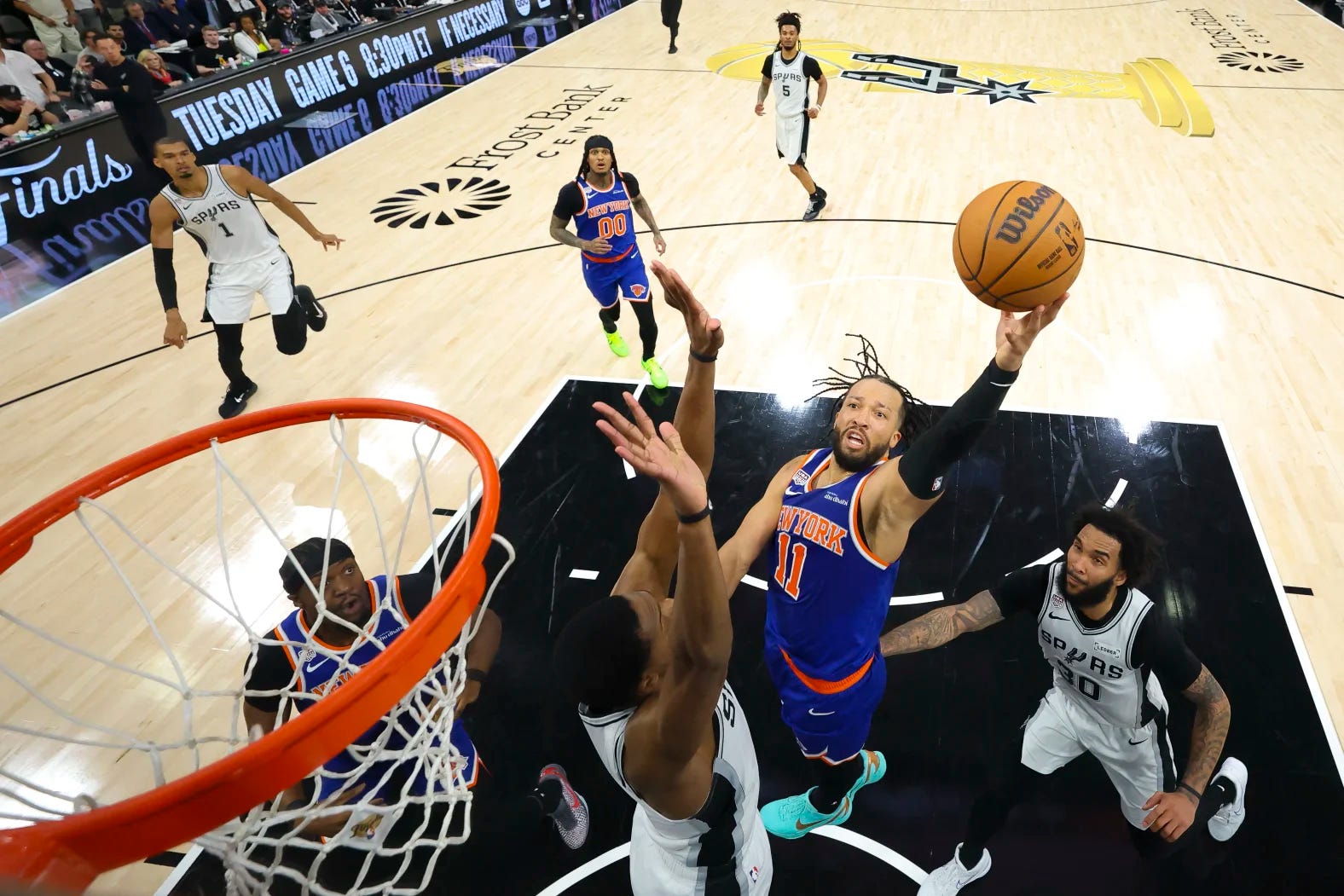
We live in a world that loves to believe talent outweighs character. That giftedness outweighs grit. That height outweighs heart. We do that because we love to focus on the visible world. It’s easier to control. The invisible world requires something deeper.
The existence of Jalen Brunson throws hella shade to the haters who think height and talent alone will eventually equate to greatness.
Let’s talk measurables. Brunson is listed at 6’2”, 190 pounds. At the draft combine, he measured even smaller, barely 6’1” without shoes, with a wingspan that didn’t scream “generational talent” either. Scouts loved his IQ and his poise but flagged the obvious: not the build, not the length, not the explosiveness the position usually demands.
And the draft told the real story. Despite two national championships at Villanova and a National Player of the Year award, Brunson didn’t go in the first round. He went 33rd overall. Second round. Three of his own college teammates got picked before him. The league looked at all that winning and all that production and still said: not enough.
That’s the part people forget. This isn’t a guy who got handed the keys to a franchise. This is a guy the entire basketball world quietly passed on, twice, once in college recruiting and once on draft night, before he ever got a real shot to be THE guy.
So how does a 33rd pick become a Finals MVP and the engine of a championship?
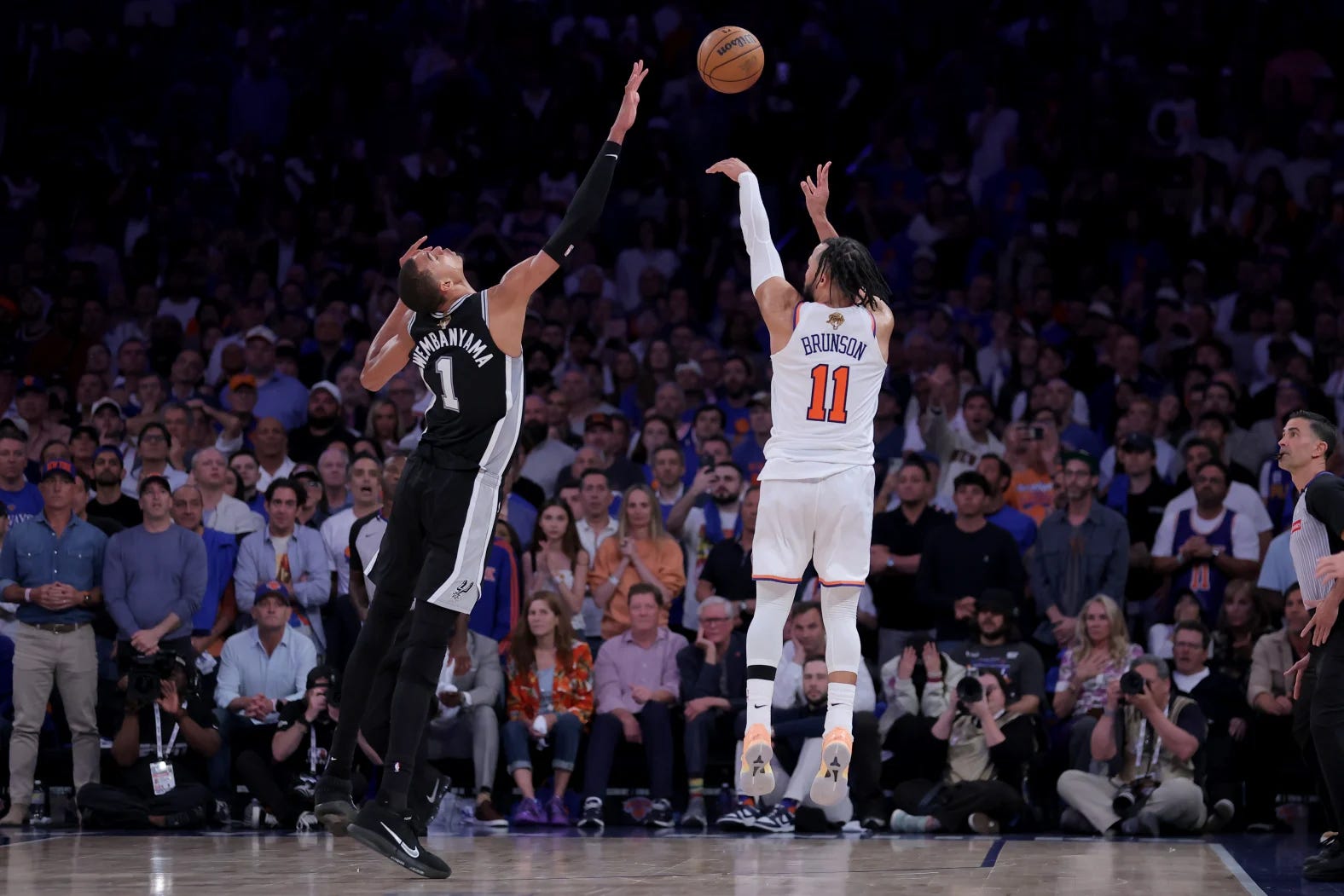
There’s a piece from ESPN, written as the Knicks were closing in on the title, that gets at exactly this. It frames Brunson’s whole story around the idea that he carries more heart than height, and that long before he silenced anyone else, he had to silence those same doubts in his own head. The piece notes that talent evaluators had already made up their minds: two college titles and a national player of the year award didn’t matter, the answer was no. Brunson heard that. Lived in that. And built his career as the rebuttal.
Sorry to everyone who had him penciled in as a career backup.
Here’s where the science backs it up.
Under pressure, your brain has two main characters fighting for control. The amygdala is your threat detector, the part wired to scream danger and trigger panic, tunnel vision, or that frozen, deer-in-headlights feeling. The prefrontal cortex is the part responsible for focus, judgment, and clear decisions. It’s the calm voice in the chaos.
In a high-stakes moment, the amygdala wants to take over. Most people let it. That’s why guys miss bunnies in the fourth quarter, why hands shake on the free throw line, why the moment gets bigger than the person.
But here’s the part that matters. Research shows that with repeated exposure to high-pressure moments, the brain physically adapts. The prefrontal cortex gets more efficient at staying online exactly when it’s needed most, and the amygdala’s reactivity gets dialed down. Athletes who’ve been in that fire over and over aren’t just “used to it” in some vague sense. Their brain circuitry has actually reshaped itself. Scientists call part of this process cognitive reserve, the brain’s capacity to stay flexible instead of fragile when the stakes spike.
Translation: Brunson hitting 45 in a closeout game wasn’t a vibe. It was a trained nervous system doing exactly what it had been built, rep after rep, year after year, to do.
That’s the real story here. Not a small point guard who got lucky. A man who built an inner game so strong that the outer game could never shake him.
So here’s the invitation. Stop chasing “height,” you know, the stuff you can see, the visible talent, the things that we all think should translate into excellence but usually doesn’t. Start building heart, you know, the stuff you can’t see, the invisible talent, the things that we all know matters most and turns normal people into giant killers.
Whatever your version of 6’1” without shoes is, the resume gap, the title you don’t have yet, the rooms where people already decided you’re a no, it’s not what determines the outcome. What determines the outcome is the way of being you bring into the moment that matters. Your character. Your composure. Your capacity to stay regulated when everything is on the line.
Invest in your inner game.
The outer game will follow.
Heart is a decision.
What’s yours going to be?